

Water saving 2026 update
06/07/2026

No water, no business
The Club consumes 550 million litres of water annually, equivalent to 221 Olympic-sized swimming pools. With facilities blocks driving 50–60% of this estate-wide consumption, the Club’s current water usage leaves it exposed to escalating water pressures.
Drought reality
Water availability is no longer a given; it is now an operational risk. The impact of climate change has intensified:
- The global threshold: The United Nations has confirmed that global warming has officially breached the 1.5°C threshold.
- The UK crisis: UK authorities have warned that England will remain in drought conditions throughout 2026.
The illusion of rain: Short-term weather patterns, such as a wet winter, do not resolve the issues of depleted resources, population pressure, and an ageing infrastructure.
Risks
Long dry periods and dwindling water reserves could pose a threat to the Club's long-term resilience:
- Regulatory restrictions: Escalating scarcity increases the risk of regulatory controls on campsite developments, expansion or new locations.
- Higher water costs: As water resources shrink, water wholesalers and water retailers' tariffs are shifting, meaning that heavy commercial users will pay disproportionately higher rates, compounding the forecast 50% surge in business water bills.
- Vulnerable infrastructure: In a drought-prone environment, undetected leaks, wasteful consumption habits, and operational downtime are both a nuisance and a risk to our campsite network.
To future-proof the Club, proactive, strong water conservation is no longer optional; it is essential.
Key water-saving measures and results
The water-saving trials commenced at the end of 2023. They focused on facility blocks at multiple campsites, including Black Knowl, Tewkesbury Abbey, The Firs, Ferry Meadow and recent project work at Abbey Wood and The Sandringham Estate Club campsites.
|
What |
How |
Trial results / status |
|
Waterless urinals |
Approved for implementation and now standard on all new builds. They offer 100% water saving and save over 120,000 litres per urinal annually. |
We also trialled an alternative retrofit system at The Firs, which reduced flushing from 96 times a day to 4 times/day, cutting water usage by 96% in urinals and continues to reduce blockages and smells. |
|
Sensor taps |
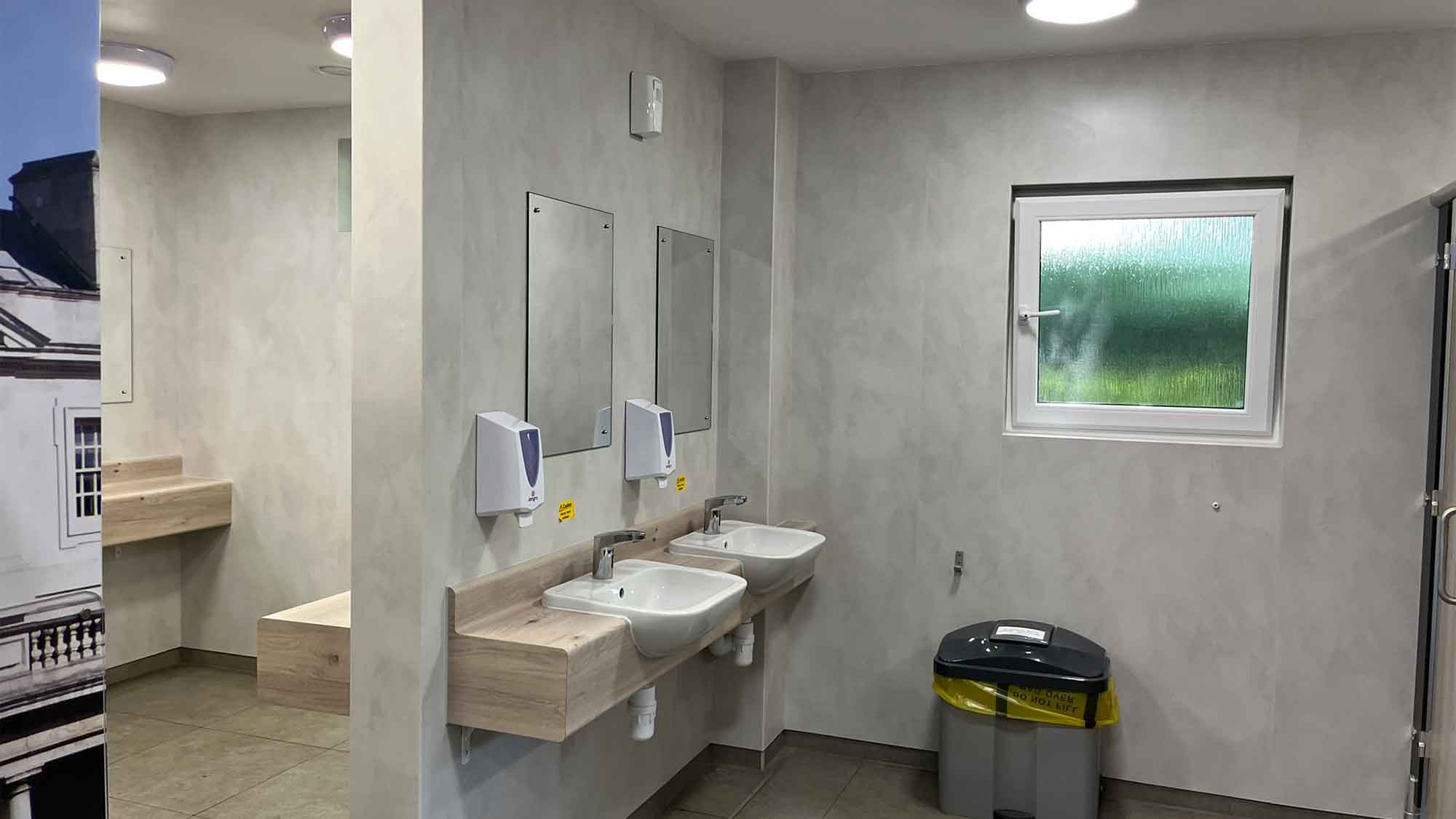
Installed to cut the water flow rate from 5+ litres per minute (lpm) down to 1.9–3.5 lpm. Savings ranged from 48% (sink taps) to 87% (dishwash). |
Customer feedback led to the removal of sensor taps from privacy cubicles, on new builds, as the short flow time was insufficient for activities like shaving or washing. But we plan to continue including at public sinks |
|
In-line sensor toilet flushes |
Moving away from traditional cisterns to electronic flushes. A 3-second flush saves 3.5 litres per flush. The trial objective was a 33% saving. |
Issues were reported with sensor sensitivity (flushing while seated) and reliability (requiring staff to reset due to failure to flush or continuous running). A new location for the sensors was put in place, and also a direct feed supply (to remove the cistern). This trial is only running at Black Knowl, but initial results are promising |
|
Low-flow shower heads |
Reduced flow from 12–15 litres per minute (lpm) down to 6 lpm, achieving a 50% saving. The trial itself saw a 64% water saving. |
These are being rolled out at new sites and have no reported impact on the user experience. Along with a review of our whole estate on what could be done to retrofit. (In areas of very soft water, the flow is increased to 9 lpm to allow hair products to be fully washed out) |
New waterless urinals at Abbey Wood
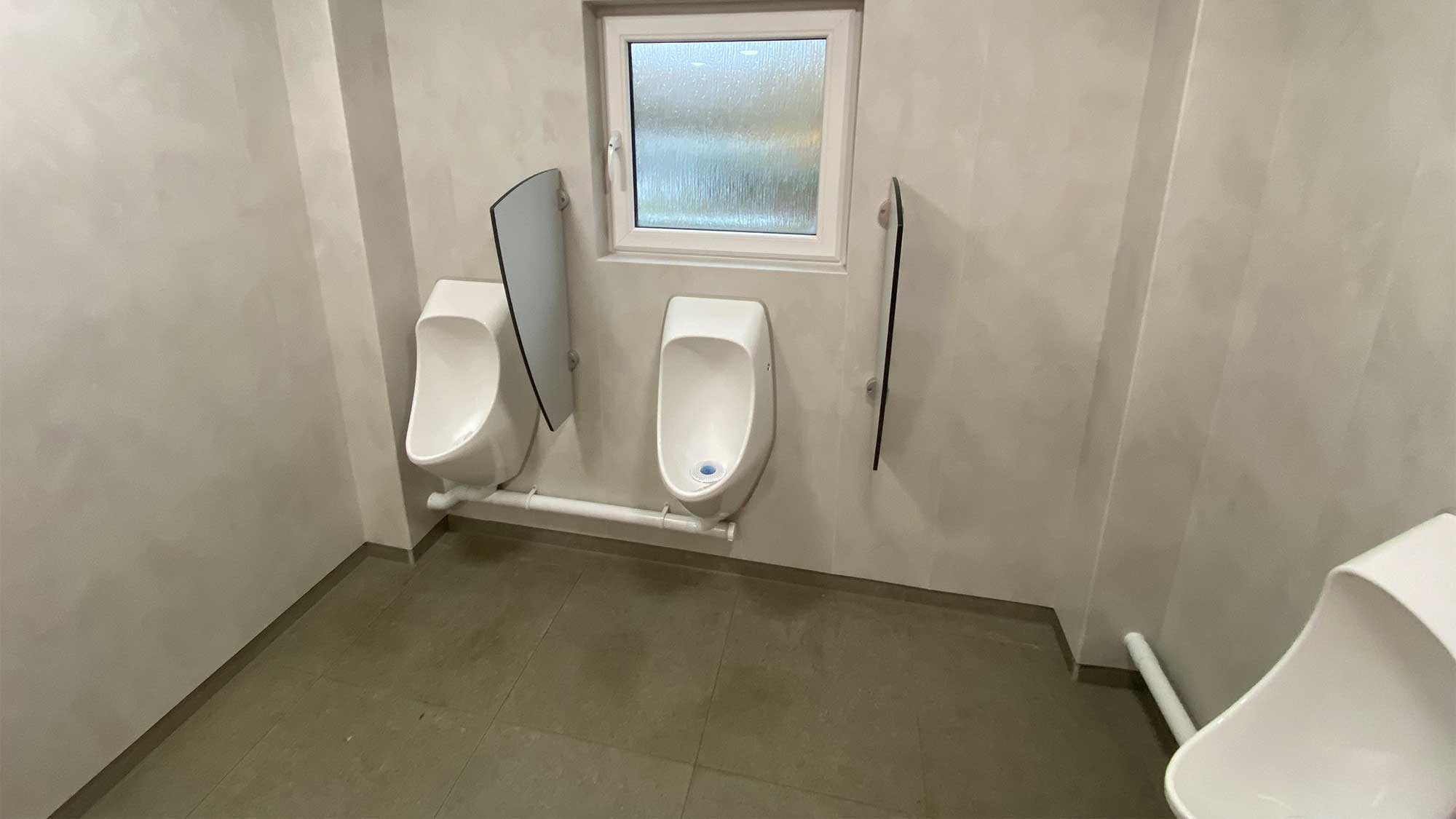
The trials delivered significant water reduction at the initial test sites:
- Black Knowl: Achieved a 32% reduction
- Tewkesbury Abbey: Achieved a 17% reduction
- Ferry Meadow: Achieved a 43% reduction
- The Firs: Achieved a 20% reduction
- Combined: These sites saved over 4 million litres of water in a single season.
Sensor taps on the public sinks in Abbey Wood
Goals and future plans
The Club is looking at the goal to reduce facility block water usage by 30% across the entire network, which would bring about both carbon and cost savings
The successful trialled setups at Tewkesbury, Black Knowl, The Firs and Ferry Meadows have been kept permanently.
- Ongoing trials: Trials are continuing at Abbey Wood and Sandringham for public taps and showers.
- New installations: Bridport Bingham Grange, Hillhead, and Black Horse Farm are planned to be equipped with waterless urinals and low-flow showerheads upon reopening.
- Service points: A reduction in water flow rates at the service points and pitches is planned at Bridport Bingham Grange.
- Target usage: We are aiming for a usage rate of under 120 litres per person per day on all full-facility sites.
- Biggest savings: Identifying and stopping water leaks is noted as the largest potential area for water saving, with data now reviewed monthly to identify and action investigations
Ultimately, the most effective way to conserve water is for everyone to be mindful, reduce their personal consumption, and ensure that water isn't wasted. This all helps ensure the long-term sustainability of our world's resources.

